Updated: February 02, 2026
When it comes to your vision, knowing what to look for can make all the difference. Age-related macular degeneration (AMD) is one of the leading causes of vision loss in adults over 60, affecting the macula, which is the small central part of your retina responsible for sharp, detailed vision.
This condition comes in two forms: dry AMD, which develops slowly and is more common, and wet AMD, which progresses more quickly and can lead to serious vision loss if not treated promptly.
Early detection gives you the best chance to preserve your vision and maintain your independence. Recognizing the warning signs and getting regular eye exams can help you catch macular degeneration in its earliest stages, when treatment options are most effective.
Keep reading to learn the early signs of macular degeneration and when it’s time to schedule an appointment with a retina specialist.
Macular degeneration often begins with subtle changes that are easy to ignore. Being aware of these early symptoms can help you seek care before significant vision loss occurs.

One of the earliest and most distinctive signs of macular degeneration is distorted or wavy vision. You might notice that straight lines, like doorframes, window blinds, or the edges of buildings, suddenly appear bent or wavy. This symptom occurs when the macula becomes damaged or swollen. If you find yourself squinting or tilting your head to see if lines really are straight, it’s time to schedule an eye exam.
Macular degeneration often affects your ability to see fine details clearly. You might find yourself struggling to read small print, even with your reading glasses. Recognizing faces becomes harder, and you may need brighter light than usual to see clearly. These changes happen because the macula controls your central vision, which is what you use for tasks that require sharp focus.
Dark or blurry spots in your central vision can signal macular degeneration.
These blind spots, called scotomas, typically appear in the middle of your visual field rather than off to the side. Unlike common floaters (those little specks that drift across your vision), scotomas stay in one place and block your view of whatever you’re looking at directly.
Changes in how you perceive colors can be another early indicator of macular degeneration. Colors may seem less bright or vivid than they used to be.
You might have trouble telling the difference between navy blue and black, or notice that reds don’t look as rich. This symptom often develops so gradually that many people adjust to it without realizing their color perception has changed.

Knowing when to schedule an appointment can be the difference between preserving your vision and experiencing permanent vision loss. Some symptoms require immediate attention.
If you suddenly notice a significant change in your central vision, such as a new dark spot that wasn’t there before, or if straight lines suddenly become very wavy or distorted, contact an eye care professional right away. These could be signs that dry AMD has progressed to wet AMD, which needs urgent treatment to prevent severe vision loss.
Even without obvious symptoms, regular screening is important as you get older. If you’re over 55, you should have a comprehensive eye exam at least every one to two years.
If you have risk factors like a family history of AMD or if you smoke, your doctor may recommend more frequent visits. People who have already been diagnosed with early-stage macular degeneration in one eye need regular monitoring to watch for progression and to protect the other eye.
During a comprehensive retinal exam, your eye doctor will dilate your pupils to get a clear view of your macula and retina. This allows them to detect even subtle changes that might indicate early AMD.
The exam is painless and provides valuable information about your eye health. At Discover Vision Centers, retina specialists use advanced diagnostic technology to detect macular degeneration in its earliest stages, giving patients the best possible outcomes.
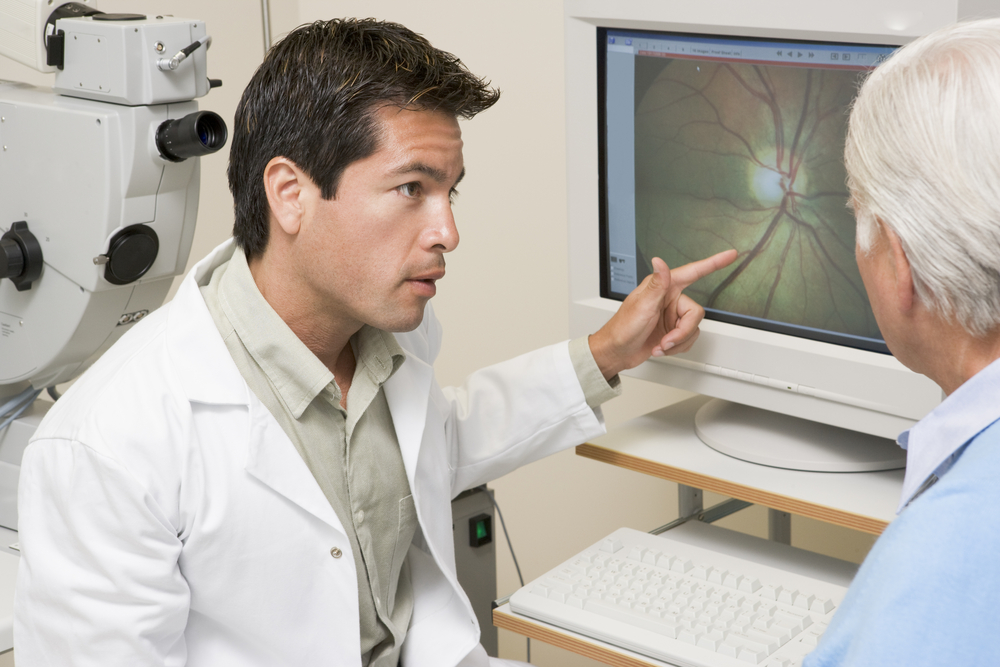
In addition to a thorough dilated eye exam, retina specialists have several sophisticated tools to detect macular degeneration before you even notice symptoms.
Optical coherence tomography (OCT) is one of the most valuable. This imaging technology takes detailed cross-sectional pictures of your retina, allowing doctors to see the individual layers of tissue and identify even tiny amounts of swelling or thinning in the macula. The test is quick, painless, and incredibly precise.
Fundus photography captures detailed color images of the back of your eye, including your retina, macula, and optic nerve. These photos create a baseline that your doctor can compare to future images to track any changes over time. For people with early signs of AMD, this ongoing documentation is particularly valuable.
Your doctor might also use an Amsler grid during your exam. This simple test involves looking at a grid of straight lines while covering one eye at a time. If you see wavy, broken, or missing lines, it can indicate macular problems. For patients diagnosed with macular degeneration, using an Amsler grid at home helps catch changes early.
When wet AMD is suspected, fluorescein angiography provides detailed information about blood flow in your retina. During this test, a special dye is injected into your arm, and as it travels through the blood vessels in your eye, a camera takes rapid photos. This helps doctors see if abnormal blood vessels are growing or leaking fluid. The exam is straightforward and gives your doctor the information needed to recommend the right treatment.
Early detection provides the best opportunity to preserve your vision and maintain your quality of life. While there’s no cure for macular degeneration yet, catching it early means you have more options to slow its progression and protect your sight. Regular eye exams become even more valuable as you get older or if you have risk factors for AMD.
If you’re experiencing any vision changes or have risk factors for macular degeneration, schedule a comprehensive retinal evaluation at Discover Vision Centers in Kansas City, MO, today!