Updated: August 07, 2026
For most patients, refractive lens exchange (RLE) recovery is fast, and normal daily activities resume within a day or two. But “back to normal” and “back to work” are not always the same thing, and the honest answer depends heavily on what your job demands of your eyes.

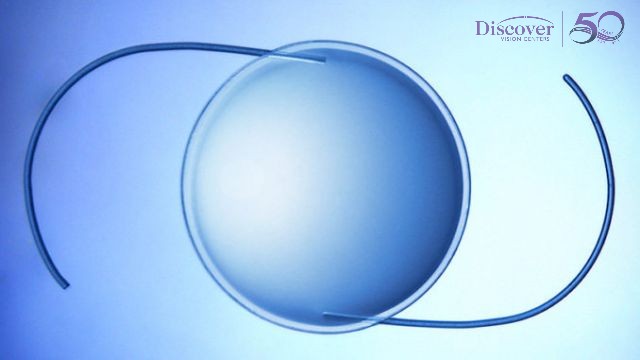
RLE uses the same surgical technique as cataract surgery, one of the most commonly performed procedures in the country. The natural lens is removed through a very small incision and replaced with an artificial intraocular lens. Because the procedure is minimally invasive and performed on one eye at a time on an outpatient basis, healing is quick. You will go home with two types of prescription eye drops, an antibiotic to prevent infection and an anti-inflammatory to control swelling, and a schedule for using them over the following weeks. Vision becomes functional fast, often within the first day, but it continues to sharpen and settle over the days and weeks that follow.
Every patient follows roughly the same arc, regardless of occupation. Knowing what each stage feels like helps you plan the rest around it.
You will receive a sedative before surgery, either oral or IV, so you must arrange a driver to take you home. Plan to rest for the remainder of the day. Mild irritation, watering, and light sensitivity are normal and usually fade within hours. The single most important rule during this window is not to rub your eye. Wear the protective shield if your surgeon provides one, especially while sleeping.
Vision clears noticeably during this stretch, and you will have a follow-up visit so your surgeon can confirm the eye is healing on schedule. You will keep up the drop routine, tapering according to the instructions you were given. For many patients, the second eye is scheduled somewhere in this window, once the first has stabilized, so recovery often overlaps between the two eyes.
This is when vision truly stabilizes and your brain adjusts to seeing near, intermediate, and distance through the new lens. If you choose a premium lens such as the Light Adjustable Lens, part of this period may include light-treatment sessions that fine-tune your prescription after the lens is already in place. That process adds a few appointments but gives you a level of customization standard lenses cannot match. Until lock-in is complete, you will wear UV-protective glasses during all waking hours, since ultraviolet light is what changes the lens. That requirement follows you to work, which is worth factoring into your plans below.
Here is where the timeline stops being one-size-fits-all. The healing itself is the same for everyone. What changes is how much your particular job stresses your eyes while they recover.

If your workday is mostly email, spreadsheets, and video calls, you are likely among the fastest to return, often within two or three days. The limiting factor is usually more related to dryness.
Staring at a screen sharply reduces how often you blink, and eyes that are already recovering feel that strain more. Keep artificial tears within reach, follow the 20-20-20 rule of looking 20 feet away for 20 seconds every 20 minutes, and position your monitor slightly below eye level to encourage a fuller blink. The same principles that apply to screen use after other vision procedures apply here, and they make the difference between a comfortable first week back and a miserable one.
Construction, warehouse work, landscaping, and nursing all raise concerns that office work does not.
Dust and airborne debris can irritate a healing eye, sweat dripping into it invites rubbing, and heavy lifting or repeated bending raises pressure inside the eye at a time when you want it calm. For these roles, plan on a longer wait before returning to full strenuous duty, often a week or more, and talk with your surgeon about protective eyewear and any lifting restrictions specific to your situation. Some patients in physical trades return to light or modified duty sooner and save the heavy work for later in recovery.
Delivery drivers, rideshare operators, and CDL holders face a different set of considerations. During the adjustment period, some patients notice glare or halos around lights, which matters most for night driving. Depth perception can also feel slightly off until both eyes are done and working together. You should wait until your vision meets legal driving standards and your surgeon confirms you are cleared, which typically means waiting for the second eye to heal rather than returning after just one.

Nurses and clinical staff have their own considerations. The main one is exposure. Hands-on care can bring a healing eye near fluids and splashes, and infection control matters more in the first days than it will later. Long shifts also make it harder to keep up a steady drop schedule. Many clinical workers are back within a few days, but your surgeon will set the timeline based on your role and how much direct patient contact it involves.
Teaching demands constant refocusing between a screen, a whiteboard across the room, and students at every distance in between, all day long. That near-to-far switching is exactly the skill your eyes are still fine-tuning in the first couple of weeks, so some blur or fatigue late in the day is normal early on. Classrooms also tend to be dry, and a teacher rarely gets to step away for drops on demand. Many are comfortable back in the room within a few days, though scheduling over a break takes the pressure off.
Surgeons, pilots, machinists, jewelers, and graphic designers depend on fine visual detail that has to be reliable rather than just functional.
For these professions, returning before vision has fully stabilized is not worth the risk of a costly mistake. Because full stabilization can take several weeks, especially with premium or adjustable lenses, build that longer runway into your plan and confirm with your surgeon that your vision has settled before you take on precision-critical tasks again.
Wondering how RLE recovery fits around your work schedule? Schedule an appointment at Discover Vision Centers in Kansas City, MO, today!