Updated: March 06, 2026
LASIK can correct three main types of refractive errors: nearsightedness, farsightedness, and astigmatism. However, it’s not a solution for every vision issue. Results vary by patient, and not everyone is a candidate for LASIK.
Keep reading to learn exactly which vision problems LASIK corrects, who makes a good candidate, and what conditions require different treatments!
LASIK reshapes the cornea, the clear front surface of your eye, using a precision laser. Your cornea bends (refracts) light rays to focus images on your retina at the back of your eye. When the cornea’s shape isn’t quite right, light doesn’t focus properly, creating blurry vision.
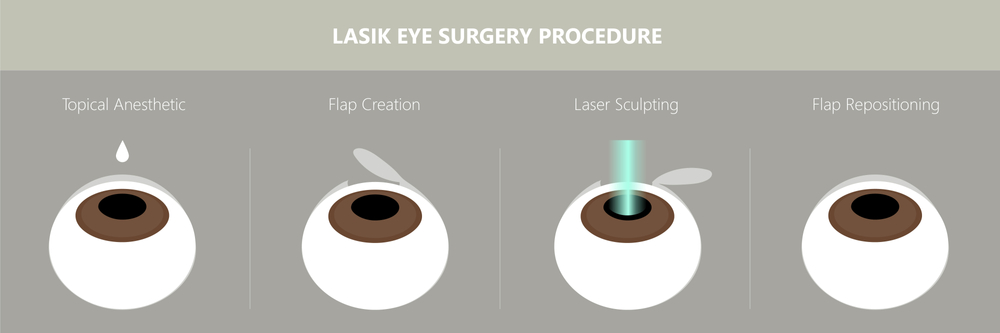
The procedure creates a thin flap in the cornea’s surface, then uses a laser to remove microscopic amounts of tissue and reshape the underlying cornea. This new shape allows light to focus correctly on your retina, producing clearer vision. The laser portion typically takes only a few minutes per eye, and many patients notice improved vision within a day, though recovery times vary.
Nearsightedness means you see nearby objects clearly, but distant objects appear blurry. This happens when your eyeball is slightly too long or your cornea curves too steeply. Light focuses in front of your retina instead of directly on it.
LASIK flattens the cornea slightly, moving the focal point back to land precisely on your retina. Most people with mild to moderate nearsightedness achieve excellent results with LASIK. Even those with higher prescriptions can often benefit from the procedure, though results may vary based on corneal thickness and other factors.
Many patients achieve 20/20 vision or better after their procedure, significantly reducing or eliminating their dependence on corrective lenses.
Farsightedness creates the opposite problem. You may see distant objects reasonably well, but close-up tasks like reading become difficult. Your eyeball might be too short, or your cornea might not curve enough. Light tries to focus behind your retina rather than on it.
LASIK treatment for hyperopia steepens the cornea’s central curve, bringing the focal point forward. The procedure works well for low to moderate farsightedness. Higher levels of hyperopia can sometimes be treated, depending on your individual eye anatomy.
People with hyperopia may notice improvements in their near vision quickly after LASIK, though results can vary, especially with higher prescriptions. Many find daily activities like working on a computer or reading more comfortable without glasses.
Astigmatism occurs when your cornea has an irregular shape, more like a football than a basketball. Instead of curving evenly in all directions, it’s steeper in some areas and flatter in others. This causes light to focus at multiple points, creating blurred or distorted vision at all distances.
LASIK can smooth out these irregularities, reshaping the cornea to a more uniform curve. The procedure corrects astigmatism alone or in combination with nearsightedness or farsightedness. Many people don’t realize they have astigmatism until they get a comprehensive eye exam. If you experience consistent blur or eye strain, astigmatism might be contributing to your vision problems, and LASIK may offer an effective solution.
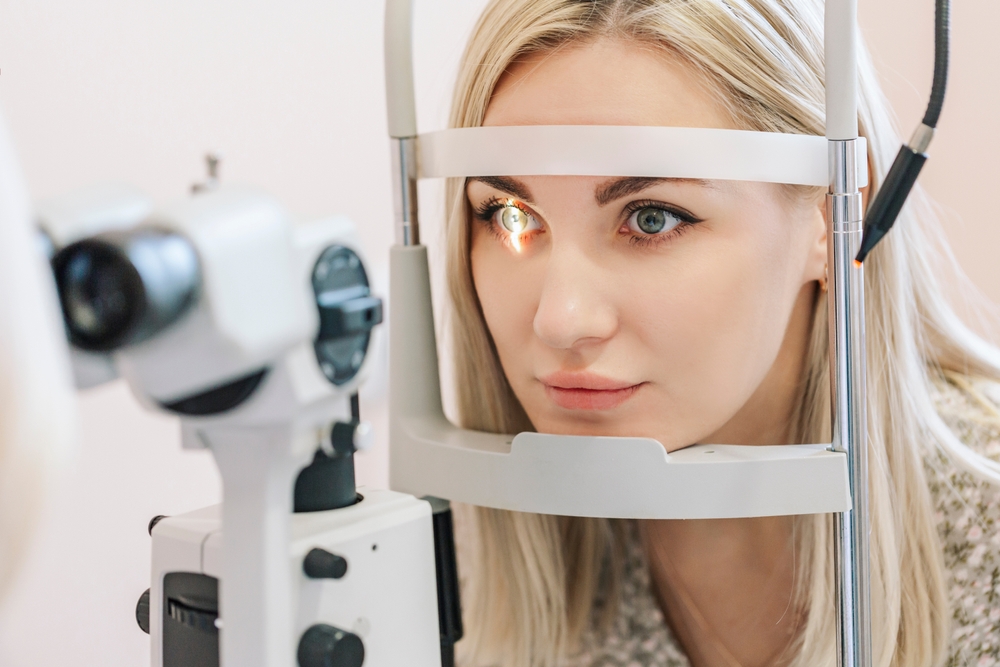
Age and prescription stability form the foundation of LASIK candidacy. You need to be at least 18 years old, though 21 or older is preferable, since your eyes continue developing through your late teens. Your vision prescription should also remain stable for at least one year before the procedure to ensure lasting results.
Your cornea’s thickness matters just as much as your prescription. The laser removes a small amount of corneal tissue during LASIK, so you need sufficient thickness to safely reshape the cornea while maintaining its structural integrity. During your consultation, your ophthalmologist measures your corneal thickness using specialized imaging technology to verify you have enough tissue for the procedure.
Good overall eye health is essential for LASIK success. Conditions like severe dry eye or certain corneal diseases may make LASIK unsuitable for your eyes. Your surgeon also evaluates your overall health, as conditions such as uncontrolled diabetes or autoimmune disorders can affect how well your eyes heal after the procedure.
A comprehensive evaluation at Discover Vision Centers includes detailed measurements of your eyes, a review of your medical history, and a discussion of your vision goals. This thorough assessment determines if you’re a good candidate and helps your surgeon create a personalized treatment plan.
Take a quick self-evaluation to see if you might qualify for LASIK, then book a comprehensive eye exam to confirm and start your journey.

Presbyopia affects nearly everyone starting around age 40. Your eye’s natural lens loses flexibility over time, making it harder to focus on close objects. You’ll notice yourself holding books or menus at arm’s length to read them clearly.
LASIK doesn’t address presbyopia because the issue lies with your lens, not your cornea. However, some people choose a strategy called monovision, where one eye is corrected for distance and the other for near vision. Your brain adapts to use the appropriate eye for each task.
This approach doesn’t work for everyone, and alternatives like Refractive Lens Exchange may provide better solutions for people experiencing presbyopia.
Cataracts develop when your eye’s natural lens becomes cloudy, typically as part of the aging process. LASIK can’t prevent cataracts from forming or remove existing ones. The cloudiness affects the lens itself, not the corneal shape that LASIK modifies.
LASIK specifically addresses refractive errors by reshaping the cornea. It doesn’t treat conditions affecting other parts of your eye, such as glaucoma or macular degeneration.
Retinal conditions, corneal diseases, and other eye health issues require specialized treatments. During your consultation, your ophthalmologist examines your entire eye to ensure LASIK addresses your specific vision concerns and that you don’t have conditions that might complicate the procedure or affect your results.
Ready to find out if LASIK is right for you? Schedule a comprehensive consultation at Discover Vision Centers in Kansas City, MO, to explore your options for clearer vision. Call 816-478-1230 or request an appointment online today.


We are closed Monday (05/25)! Urgent Care is also closed Saturday (05/23)!
We are closed Friday (07/03)!
We are closed Monday (09/07)! Urgent Care is also closed Saturday (09/05)!
We are closed Thursday (11/26) and Friday (11/27)! Urgent Care is also closed Saturday (11/28)!